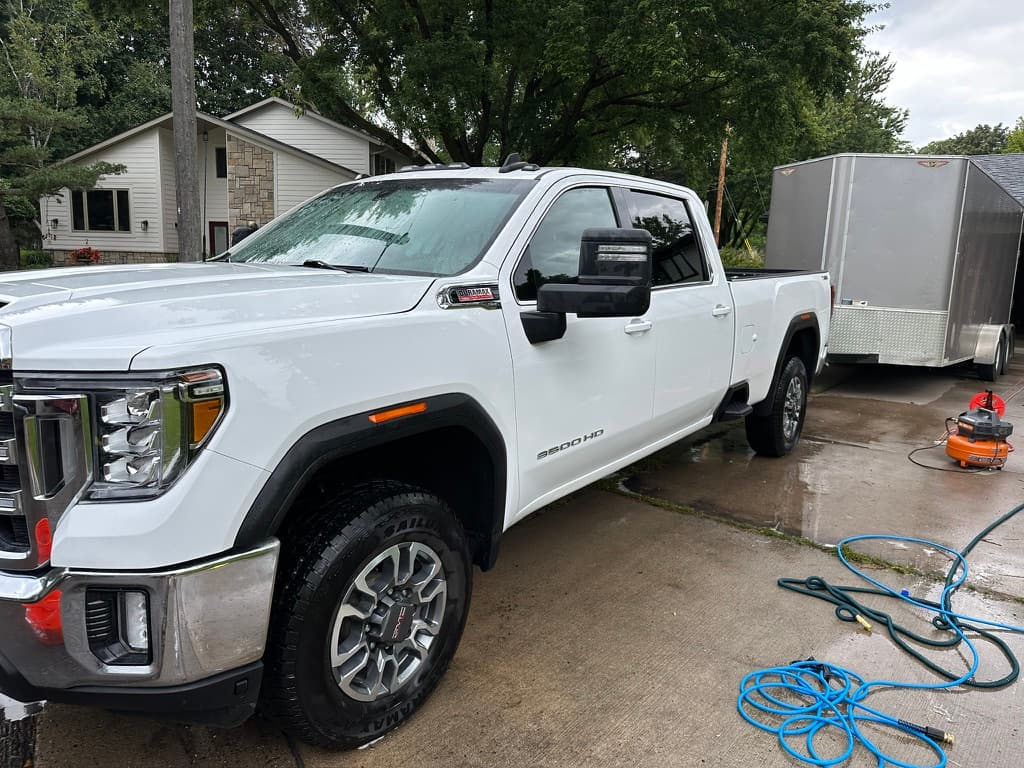
How to Get Fleet Accounts for Your Detailing Business
Fleet accounts don't find you. But one contract can replace three weeks of chasing individual clients — here's exactly how to land your first three.
The short answer: To get fleet accounts for your detailing business, identify local companies with branded vehicles (contractors, real estate agencies, property managers), offer one free demonstration detail, follow up with a one-page proposal within 24 hours, and lock in recurring service with auto-billing. Most detailers land their first fleet account within 30 to 60 days using this sequence.
Most detailers treat fleet work like a bonus. Something that happens when a business owner happens to call. That's the wrong way to think about it. A single fleet account — a roofing company with 8 trucks, a real estate agency with a branded SUV fleet, a delivery company with 15 vans — adds $800 to $2,500 per month in predictable, recurring revenue. Not a one-off. Every month. On a schedule you set.
If you're doing $8k–$12k a month and your calendar has dead Tuesdays and empty Thursday afternoons, fleet accounts solve that. Not more Instagram posts. Not another round of Facebook ads. Contracted, recurring work that fills the gaps before the week starts.
This is the system for landing your first three fleet accounts in 60 to 90 days. No cold emailing strangers, no bidding wars, no discounting your way to the bottom.
Why Fleet Work Changes Your Revenue Math
The instinct most detailers have about fleet accounts is that they're lower margin. You're pricing volume, so you give a discount. That's true — and it's still worth it.
Here's the actual math. A solo detailer doing consumer work books 4–6 cars a week. Each job requires: a new inquiry, a quote, a confirmation, follow-up if they go quiet, a reminder the day before. That's 30–45 minutes of admin work per client before you've touched a car.
A fleet account with 10 vehicles at $75 per vehicle gives you $750 on a fixed schedule. No inquiry. No quote. No follow-up. You show up Tuesday morning and work. The admin overhead drops to near zero because the contract handles everything upfront.
The margin per vehicle is lower. The margin per hour of your time is often higher because you cut out the entire acquisition and booking cycle.
Three fleet accounts at $800 per month each gives you $2,400 in baseline revenue that requires zero marketing, zero chasing, and zero guessing about where next week's work is coming from. That's the number that ends the feast-or-famine cycle for most detailers in the $8k–$15k range.
The Right Businesses to Target (And the Ones to Skip)
Not every business with vehicles is worth pursuing. The ones that convert share three traits: they care how their vehicles look, they have a consistent vehicle count, and the person who approves service spend can say yes without a three-week approval chain.
Best targets:
- Real estate brokerages and agents. Branded vehicles. Image-conscious owners. Decisions made fast because the agent controls their own marketing spend. One brokerage with 6–8 agents booking monthly details is worth $600–$900/month.
- Roofing, HVAC, and plumbing companies with branded vans. These companies know their trucks are rolling billboards. A dirty van with their name on the side is a business image problem. That logic lands immediately. Established contractors run fleets of 5–20 vehicles.
- Dealerships — used-car prep specifically. Prep work for used-car lots is unglamorous but steady. 10–20 vehicles a week at $60–$100 per car adds up fast. The work is simpler than consumer detailing, so you turn jobs faster.
- Property management companies. Maintenance vehicles, courtesy vehicles, and periodic interior cleaning on tenant turnover. Decision-maker is usually one office manager.
- Local car rental franchise locations. Local owners of rental franchise branches make their own vendor decisions without corporate sign-off. Turnaround details on rental returns are quick volume work at decent per-vehicle rates.
Skip for now:
- Government fleet contracts. Procurement takes months, often requires formal bidding, and the timeline kills momentum when you're building from scratch.
- Long-haul trucking companies. Vehicles are too dirty, work is too heavy, price pressure is constant. Wrong market for a detail shop.
- Any company where you'd need to present to a committee. The longer the approval chain, the lower the close rate.
How to Get Fleet Accounts Detailing: The 5-Step Approach
The mistake detailers make going after commercial work is leading with a price list. A business owner isn't looking for the cheapest option — they're looking for a vendor they don't have to think about. Your pitch should solve their management problem, not just their cleaning problem.
Here's the sequence.
Step 1: Identify 10 specific targets in your area.
Open Google Maps. Search "HVAC contractor [your city]," "real estate brokerage [your city]," "plumbing company [your city]." Look at the results and write down businesses with a visible fleet of branded vehicles — you can check their website photos or Google Street View. You want 10 specific companies, not 10 categories. Business names, addresses, and the name of the owner or office manager. LinkedIn works for this. So does calling the main line and asking "who handles your facility and vehicle vendors?"
Step 2: Offer one free detail.
Reach out to your 10 targets with one proposition: you'll detail one of their vehicles at no charge so they can evaluate the quality. No strings.
This isn't discounting. It's a demonstration. A business owner who sees the before and after on their fleet van will make a decision based on that result, not a description of your service packages. A free detail on a $600/month account costs you 2–3 hours. That's a reasonable investment if one out of five targets converts.
The ask: "I run a detailing operation in [city] and I'm looking to work with a few local businesses on fleet maintenance. I'd like to do one vehicle at no charge so you can see the quality before we talk about anything. Is there a van or truck we could start with?" That's the whole pitch. No rate sheet. No service menu.
Step 3: Do the best work of your week on the demo job.
This is where commercial pitches fail. Detailers show up for the free demo and do average work because it's free. Do your best work. Take a before photo when you arrive. Send the after photo directly to the decision-maker when you're done. Not just leave the car parked — send the photos with a message: "Here's where it started, here's where it is now."
That photo sequence is your close. Specific proof. Their vehicle, their result.
Step 4: Send a one-page proposal within 24 hours.
A PDF with your logo, their business name, and three service tiers: basic maintenance wash (monthly), interior and exterior refresh (monthly or bi-weekly), and a premium package for image-critical vehicles. Include per-vehicle pricing for each tier.
Keep it to one page. Business owners with full schedules skim five-page proposals. One-page summaries get read.
Include one line about scheduling logistics: "We handle all scheduling — you get a fixed day and time each cycle and a confirmation the week before." That removes their management overhead, which is often the actual objection.
Step 5: Remove every reason to say no.
The two things that kill fleet deals are complicated contracts and billing friction. A one-page agreement covers: services included, price per vehicle, billing date, and a 30-day cancellation clause. Stripe or Square with a card on file for auto-billing means they never have to think about a check. The easier you make the operational side, the faster deals close. When a prospect says "let me think about it," they're usually picturing complexity — invoices to manage, scheduling calls, disputes over quality. Strip that out of your proposal.
How to Price Fleet Accounts Without Underselling Your Time
Fleet pricing is negotiated, not listed. But you need a floor before you walk in so you don't end up with an account that's not worth the slot on your schedule.
A working framework:
- Basic maintenance wash (exterior only, quick turnaround): $40–$75 per vehicle depending on size
- Interior and exterior detail: $80–$150 per vehicle
- Premium service (full detail, dressing, protection): $150–$250 per vehicle
Set a minimum contract floor based on vehicle count. Accounts with fewer than 4 vehicles aren't worth the scheduling overhead unless they're booking premium service. Aim for contracts worth at least $400/month before you take the meeting.
Volume discount: offer 10–15% off your retail rate for 8+ vehicles per month. That's your only concession unless volume exceeds 20 vehicles per cycle — at that point, your per-hour efficiency goes up enough to justify a slightly deeper discount.
One thing worth knowing: fleet clients who care about vehicle appearance pay closer to retail than you'd expect. A real estate broker whose brand depends on a polished image will pay $120 per car on a monthly contract. The clients who push hardest on price are typically the ones who don't actually care how their fleet looks — which tells you how long that relationship will last.
If you don't have a system handling your consumer leads automatically yet, get that in place first. Adding fleet complexity on top of manual consumer follow-up creates scheduling chaos, not baseline revenue.
After You Land the First Account
The first fleet account is the hardest one. After that, the sequence speeds up.
A satisfied fleet client is the most direct referral source in a service business. The companies you want to work with know each other. The HVAC contractor knows the plumber. The real estate broker knows the property manager. Ask for one referral 60 days after your first invoice — not at the start, not before you've built consistency. After 60 days of clean, on-time, problem-free service.
The ask: "I'm looking to work with a couple more businesses in the area. Do you know anyone with a fleet who'd benefit from what I do for you?" Direct. No incentive program. Just a question from a vendor they trust.
Three to five fleet accounts at the right price changes your weekly baseline. You go from needing 14–16 consumer bookings a week to cover overhead, down to 8 — because $2,400 of that week's revenue is already confirmed before Monday.
That's what a detailing business with a floor looks like. Not more hustle. Contracts that fill the calendar before the week begins.
The Step That Matters
Write down 10 specific businesses this week. Not a list of categories — 10 companies with names and a contact person. Send the free demo offer to all 10. Close one. Then run the same sequence with the next 10.
To understand how your speed-to-lead process connects to closing fleet deals faster, read how the 5-minute response window works — it applies to commercial follow-up the same way it does to consumer leads.