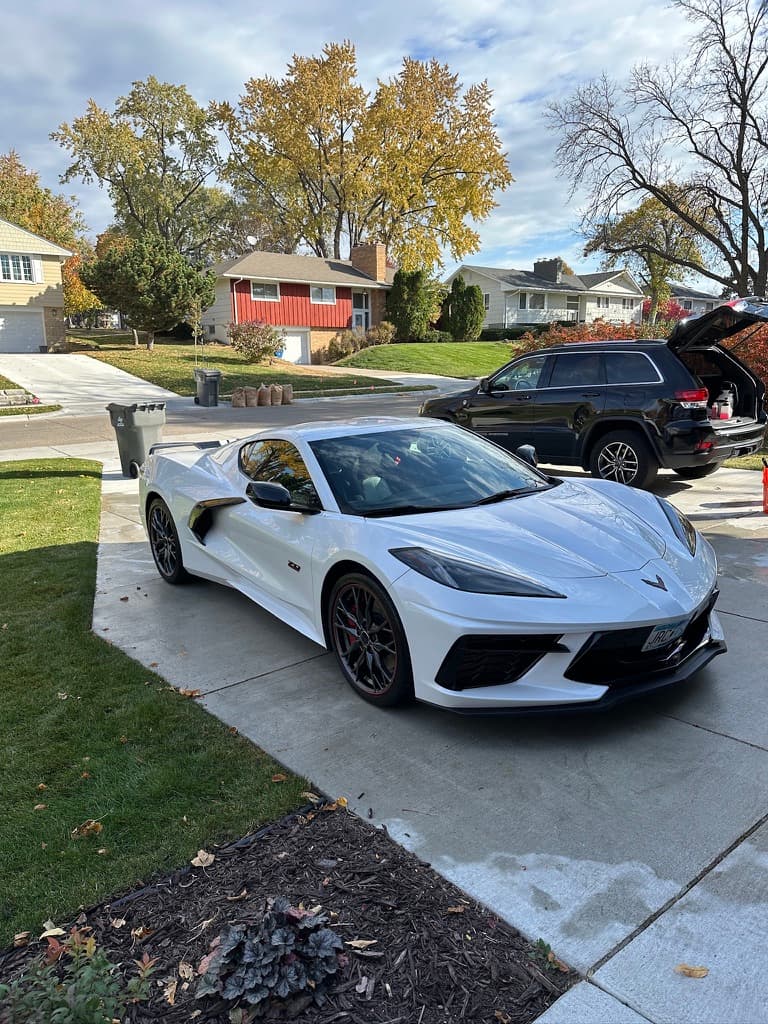
Car Detailing Google Ads: What a Real Account Setup Looks Like (And Why Agencies Get It Wrong)
Most detailers running Google Ads are paying $15–$40 per click to book $80 wash jobs — and wondering why the math doesn't work.
TL;DR
- Most detailing Google Ads accounts are structured for volume, not value — they push wash traffic when the real profit is ceramic coatings and paint correction.
- Your account architecture should match your service margins: separate campaigns for high-ticket work, separate budgets, separate landing pages.
- Generic agencies don't know the difference between a $120 wash and a $1,800 ceramic job — so they optimize for the wrong thing.
- A properly built detailing ad account needs negative keywords, location radius targeting, and conversion tracking tied to actual booked jobs — not form fills.
- The average cost per booked ceramic coating job from Google Ads runs $80–$150 when the account is built right. On a $1,800 job, that's still a 10x+ return.
Why Google Ads Fails Most Detailers (And Why That's Not Google's Fault)
Google Ads works. The issue is that most detailing accounts are set up by agencies — or by tutorials — that treat your shop like a pizza place.
Every Google Ads guide for detailers covers the same ground: set your location, pick some keywords, write a headline. What none of them tell you is that car detailing has a margin structure unlike almost any other local service business.
One ceramic coating job nets roughly the same profit as 40–50 washes. The economics are not the same. The ad account should not be the same.
When a generic agency builds your campaign, they optimize for click volume. More clicks = more "leads." More "leads" = their dashboard looks good. Whether those leads book $90 wash appointments or $1,800 ceramic packages doesn't change their reporting. It absolutely changes your bank account.
This is the gap. And it's why "we ran Google Ads and it didn't work" is one of the most common things detailers say.
What a Generic Detailing Ad Account Looks Like
Here is what most agencies build when they take on a detailing client:
- One campaign, broad keywords, location targeting set to the entire metro area
- Ads that lead to the homepage
- Bidding strategy: Maximize Clicks (cheap and shows a lot of activity)
- Conversion tracking: form submission (not a booked appointment — a form fill)
- Budget split: zero differentiation between a $90 mobile detail and a $2,000 ceramic coating
The result is a campaign that generates activity. Clicks, impressions, cost. The cost-per-lead looks reasonable. The problem is that the leads booking are price shoppers looking for the cheapest option — because your broad keywords matched "cheap car wash near me" and your ad said nothing to filter them out.
You end up paying to compete with Mister Car Wash.
The Account Structure That Actually Works for Detailers
Build your campaign architecture around your margin tiers — not your service menu.
Here is what a well-built detailing account looks like:
Campaign 1: High-Ticket Services (Ceramic, PPF, Paint Correction)
This is where your budget should be weighted. These jobs carry $800–$2,500 in revenue and $400–$1,200 in net. A $100 cost-per-booked-job is a reasonable acquisition cost. A $150 cost-per-booked-job is still profitable.
Keywords for this campaign (exact and phrase match only):
| Match Type | Keyword |
|---|---|
| Phrase | "ceramic coating [city]" |
| Phrase | "paint correction near me" |
| Exact | [ceramic coating cost] |
| Exact | [ppf installer near me] |
| Phrase | "auto detailing ceramic coating" |
Bidding strategy: Target CPA or Maximize Conversions once you have 20+ conversions. Start with Manual CPC while you gather data — $8–$15 per click is normal for these terms.
Landing page: Dedicated ceramic coating page. Not your homepage. The page should have one job: get the visitor to fill out a quote form or call. Remove all navigation. Show before/after photos, pricing range, and what the process looks like.
Campaign 2: Standard Detailing (Full Details, Interior, Exterior)
This is your volume campaign. Keep the daily budget lower than Campaign 1 — these jobs book more frequently but at lower margins. The goal here is filling schedule gaps and building repeat customers.
Keywords:
| Match Type | Keyword |
|---|---|
| Phrase | "car detailing near me" |
| Phrase | "auto detailing [city]" |
| Phrase | "interior car detailing" |
| Phrase | "full detail service" |
Bidding strategy: Maximize Conversions. These convert faster and at lower CPC ($4–$8 range).
Campaign 3: Fleet (If You're Targeting Commercial Accounts)
Separate campaign, separate budget, separate landing page. Fleet keywords are lower volume but the lifetime value of a single fleet account can run $500–$2,000 per month. One booked fleet client from a $200 ad spend is not a bad trade.
Keywords:
| Match Type | Keyword |
|---|---|
| Phrase | "fleet detailing [city]" |
| Phrase | "commercial vehicle detailing" |
| Exact | [fleet car wash service] |
Negative Keywords: The Most Important Thing Most Accounts Skip
Without negative keywords, your budget leaks to searches that will never convert.
Add these as negatives to every campaign before you spend a dollar:
- "diy," "how to," "at home," "yourself"
- "school," "class," "course," "training," "certification"
- "supplies," "products," "wax," "polish," "shampoo," "chemicals"
- "jobs," "employment," "hiring," "career"
- "free," "cheap," "discount" (optional — depends on whether you want price shoppers)
- "auto parts," "car wash machine," "pressure washer"
Run a search terms report every two weeks for the first 60 days. Add every irrelevant term to your negative list. This is the single highest-ROI task in Google Ads management — and almost no agency does it consistently after the first month.
Conversion Tracking: The Part Agencies Always Get Wrong
A form fill is not a conversion. A booked job is a conversion.
Most detailing ad accounts track "form submissions" or "thank you page views" as conversions. The problem: people submit forms and never book. They submit for quotes they have no intention of accepting. When you optimize for form fills, Google's algorithm finds more form fillers — not more customers.
Set up conversion tracking properly:
- Phone call conversions — Google can track calls directly from ads and from your website. Set the minimum call duration to 60 seconds. A 10-second call is not a real lead.
- Quote form submissions — Track these, but tag them as "soft conversions" with a lower conversion value.
- Booked appointments — If your booking software has a confirmation page (most do), set that URL as a conversion. This is the one that matters.
When Google's algorithm is optimizing toward actual booked jobs, it finds customers. When it's optimizing toward form fills, it finds browsers.
Budget Allocation: Where to Start
If you're starting from zero with a $1,500/month Google Ads budget, here is how to split it:
| Campaign | Daily Budget | Monthly Allocation |
|---|---|---|
| Ceramic & High-Ticket | $35/day | ~$1,050 |
| Standard Detailing | $10/day | ~$300 |
| Fleet (optional) | $5/day | ~$150 |
Weight toward ceramic and high-ticket from day one. Those clicks are more expensive individually, but the jobs they book are worth 10x more. You want data on what converts at the top of your margin stack before scaling volume at the bottom.
If your budget is tighter — say $600–$800/month — run ceramic only. One booked job per month covers the ad spend with room left over. Build the volume campaigns once the high-ticket account has data.
Ad Copy: What to Write (And What to Stop Writing)
Most detailing ad copy looks like this:
"Professional Car Detailing | Serving [City] | Book Online Today"
That copy converts at 1–2% because it looks identical to every other ad in the auction. There is nothing in that headline that filters for a buyer versus a browser.
Write copy that does two things: states a specific outcome and qualifies the reader.
For ceramic coating campaigns:
- Headline 1: Ceramic Coating — 5-Year Protection
- Headline 2: [City] Shop — Same-Week Appointments
- Headline 3: Free Quote · Starts at $899
For standard detailing:
- Headline 1: Full Detail From $149 — [City]
- Headline 2: Interior + Exterior · Same-Day Available
- Headline 3: 150+ Reviews · Book in 2 Minutes
State the price (or a starting price). It eliminates price shoppers before they click. Every click you prevent from a non-buyer saves you $8–$15 in ad spend. The people who still click after seeing "$899" are buyers.
The Agency Problem, Specifically
If you've hired a marketing agency to run your Google Ads and the results were underwhelming, here is what likely happened:
They didn't know your margins. A generic agency manages dozens of industries. They don't know that a ceramic coating at $1,800 has different economics than a $90 wash. So they built you a campaign that looks like any local service account.
They tracked the wrong thing. Form fills and phone calls (all calls, regardless of duration or intent) got counted as wins.
They never cut the waste. Negative keyword lists weren't maintained. After the first month, the account ran on autopilot and kept paying for irrelevant traffic.
The account structure wasn't yours. When you left, the account history, the data, the conversion library — all stayed with the agency's Google Ads account. You started from zero with the next agency or doing it yourself.
This is a structural problem with how generic agencies operate. It's not incompetence — it's misaligned incentives. They bill on ad spend or a flat retainer. Whether your ceramic coating campaign books three jobs this month or twelve is not their financial problem.
The International Detailing Association notes that professional detailing businesses have average ticket prices well above other home service categories — yet most digital marketing agencies lump them in with the same playbooks they use for carpet cleaning and lawn care.
What "Working" Google Ads Looks Like for a Detailing Business
After 60–90 days of a properly structured account, these are reasonable benchmarks:
| Metric | Target |
|---|---|
| Cost per booked ceramic job | $80–$150 |
| Cost per booked standard detail | $25–$55 |
| Click-through rate (search) | 8–15% |
| Conversion rate (click to form fill) | 6–12% |
| Close rate (form fill to booked job) | 30–50% |
If your cost per booked ceramic job is above $200, something is wrong with the account — usually tracking, landing page, or keyword match types.
If your close rate on form fills is below 20%, the problem is not the ads — it's your follow-up speed. A lead that comes in through Google Ads has a shorter attention span than an organic referral. They searched, clicked, filled out a form, and are waiting. If you don't respond within 5 minutes, they've clicked two more ads and gotten quotes from two competitors.
The ads can generate the lead. A broken follow-up system loses it. We've covered the 5-minute speed-to-lead window in detail — if that part of your process isn't dialed in, fix it before you touch your ad budget.
How DetailPro Handles This Differently
DetailPro was built specifically for detailing businesses — which means the account structure, conversion tracking, and follow-up system are calibrated to how detailing actually works.
That means:
- Ad accounts built around margin tiers, not service menus
- Conversion tracking tied to booked jobs, not form fills
- Automated 5-minute follow-up so leads don't go cold before you see them
- Campaigns managed by people who understand that one ceramic job is worth 40 wash appointments in net profit
If you've been burned by an agency that ran your Google Ads like you're selling plumbing services, there's a different way to run this.
Book a strategy call with DetailPro — we'll audit your current account (or build one from scratch) and show you exactly what a margin-first detailing campaign looks like.
The Bottom Line
Google Ads works for detailing businesses. The math makes sense — especially on high-ticket services like ceramic coatings and paint correction, where a single booked job can return 10–20x what you spent to acquire it. If you're still working on getting more leads before scaling ad spend, read how to get more detailing clients without spending more on ads first — it covers the lead pipeline that has to be healthy before paid traffic is worth adding.
The version of Google Ads that doesn't work is the generic version: one campaign, broad keywords, homepage as the landing page, form fills as the conversion metric, and no negative keywords.
Build the account around your margin tiers. Track booked jobs, not form fills. Run negative keywords every two weeks. Weight your budget toward ceramic and PPF before scaling standard detail volume.
That's what a real detailing ad account looks like. The agencies who don't know this are the same ones who don't know what a two-stage correction costs or why a Rupes LHR21 is not interchangeable with a rotary. They're running your marketing from a template.
You deserve better than a template.