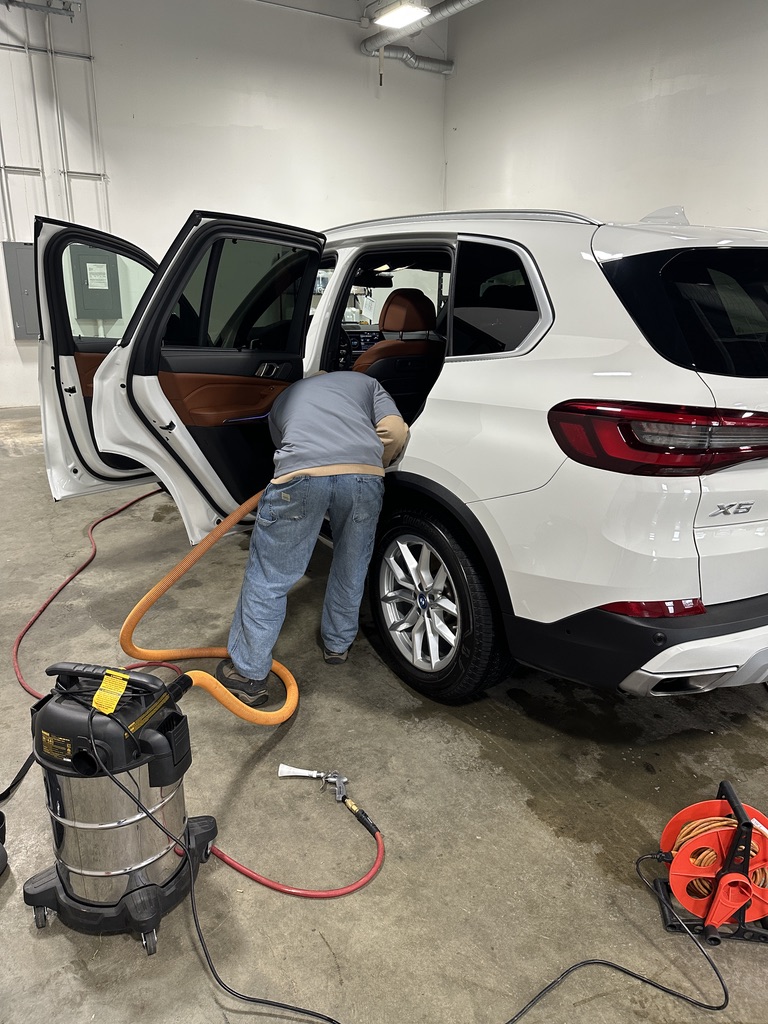
Auto-Reply for Detailing Business: Stop Losing Leads While You're Under a Car
You missed the call. They booked someone else. It took 4 minutes.
TL;DR
- A lead who doesn't hear back within 5 minutes is 21x less likely to convert than one who does — and most detailers can't respond that fast while working
- A missed-call text-back triggers an auto-reply the moment you don't pick up, keeping the lead in your orbit instead of sending them to your competitor
- The message copy matters as much as the timing — generic "we'll call you back" texts lose leads; detailing-specific copy gets replies
- You need a two-step follow-up sequence: an immediate text, then a second message 2 hours later if they go quiet
- This is a systems problem, not a hustle problem — setting it up once means it runs every job day without you thinking about it
What Happens to a Lead You Don't Answer in 5 Minutes
The 5-minute response window is the most important number in your detailing business. Research from Harvard Business Review and MIT shows leads contacted within 5 minutes are 21 times more likely to convert than those reached after 30 minutes. After an hour, that lead is effectively gone.
Here's what that looks like in practice. Someone searches "ceramic coating near me" on a Thursday afternoon. They call three shops. You're under a Tahoe doing paint correction — can't pick up. The other two go to voicemail as well. One has an auto-reply that fires back in 14 seconds: "Hey, saw you called! I'm with a client right now — what are you looking to get done? I can get you a quote and check availability." They reply. That shop books the job.
The lead didn't choose them because they were better. They chose them because they were there.
Most detailers treat this as a demand problem. They run more ads, post more content, offer discounts. The actual problem is that the leads are arriving — and leaking out the back before you can catch them.
Speed-to-lead is the #1 booking factor in service businesses. Detailing businesses that nail it convert at dramatically higher rates than those relying on callbacks. The bottleneck isn't demand. It's response time.
The Missed-Call Text-Back — How It Works and Why It Wins
A missed-call text-back is exactly what it sounds like: when an inbound call hits your number and goes unanswered (or to voicemail), the system automatically fires a text to the caller within seconds.
No manual action from you. You stay under the car. The lead gets a response.
Here's why this matters specifically for detailing — and why generic service business advice misses the point. A plumbing lead might wait a few hours for a callback. They have a broken pipe; they'll keep calling. A detailing lead is doing comparison shopping. They want a ceramic coating, they pulled up three shops, and the one that responds first gets the appointment. There's no urgency forcing them to wait for you.
The auto-reply doesn't just capture their attention — it resets the clock. Instead of being in a race you've already lost because you didn't answer, you're now in an active conversation. They're texting back. They're engaged. You've moved from "missed call" to "warm lead."
The psychological mechanic is simple: a text is lower friction than a callback. The lead doesn't have to find a quiet moment to take a call. They reply when they're ready. You've put the ball in their court in a way that keeps the door open.
What to Say (The Exact Copy That Gets Replies)
Most missed-call auto-replies fail because they sound corporate. "We received your call and will return it as soon as possible." That's not a message — it's a dismissal.
Here's what works for detailing leads specifically.
Message 1 — The immediate text-back (fires within 60 seconds of missed call):
"Hey! Missed your call — I'm finishing up with a client. What were you looking to get done? I can pull up availability and get you a quick quote."
That's it. Three sentences. Note what's in there:
- You acknowledged you missed the call (transparency, not excuse)
- You gave a reason that signals you're busy and in-demand
- You asked a question that moves the conversation forward
- You offered two things they actually want: a price and a time slot
What's not in there: "Thank you for contacting us." "One of our team members." "We value your business."
The tone is a person, not a company. Detailing is a personal service. People book detailers they trust with their paint. A robotic text undercuts that from the first message.
For high-ticket inquiries — ceramic coatings, paint correction, full corrections on exotics:
"Hey — missed you, sorry about that. Was in the middle of a coat. What's the vehicle and what are you thinking? Ceramic, paint correction, or something else? I'll shoot you a quick estimate."
Mention the service you're doing. It signals you're a working detailer, not a call center. For a ceramic coating lead — where you're talking about a $1,000–$3,000 job — that detail closes the trust gap immediately.
What to avoid:
- Links in the first message (spam filters, lower open rates, feels like marketing)
- Your full price list ("packages start at $99!")
- Asking for their name before asking what they need — it's backwards and feels like a form
The Follow-Up Sequence After the First Auto-Reply
The first text fires immediately. But not everyone replies right away — they're at work, driving, or they got distracted. You need a second touchpoint.
Here's the sequence:
Step 1 — Immediate (0–60 seconds after missed call): The message above fires automatically.
Step 2 — 2 hours later, if no reply:
"Still happy to help if you're looking to get something booked. What's the car?"
Short. No pressure. It re-opens the thread without being aggressive. Two hours is the right gap — long enough that they've had time to respond if they were going to, short enough that they still remember the missed call.
Step 3 — 24 hours later, if still no reply:
"Last follow-up — if timing's not right, no worries. When you're ready, I can usually get you in within the week."
This closes the loop. "Last follow-up" signals you're not going to spam them. "Usually get you in within the week" plants urgency without manufacturing it — it's just a true statement about availability.
After 3 touches with no reply, stop. Move on. The lead either isn't ready or went somewhere else. Chasing beyond that point damages your brand.
If they do reply at any step: Pull them into a live conversation as fast as you can. Get the vehicle make and model, what service they're interested in, and their availability. Text like a person. The auto-reply got them in the door — now you close it like normal.
Setting It Up — What You Actually Need
A detailing auto-reply for missed calls isn't something you build in your iPhone settings. You need a CRM or automation platform that can:
- Connect to your business phone number (or forward your number through the system)
- Detect missed calls in real time
- Trigger an SMS to the caller's number automatically
- Track replies and open a two-way conversation thread
- Queue the follow-up messages on a timer if there's no reply
The core requirements in plain terms:
A business phone number through the platform. This is usually a local number that the CRM provides. Your personal cell stays separate. Calls route through it, and the system sees every missed call.
SMS automation with trigger logic. The trigger is: call received + not answered = fire text. Most detailing CRMs handle this natively. Generic CRMs like Jobber don't — which is one of several reasons detailing-specific software matters.
A two-way SMS inbox. When the lead replies, you need to see it and respond from the same number. Switching them to your personal cell mid-conversation breaks the thread and confuses people.
Automated follow-up queues. The 2-hour and 24-hour messages need to fire without you scheduling them. Set the sequence once. It runs on every missed call from then on.
The setup time on a purpose-built platform is under an hour. Once it's running, you don't touch it — it just works in the background while you're polishing paint.
For more on building the full lead system beyond the auto-reply, this breakdown covers the complete detailing client acquisition process.
How Much Revenue Is Your Response Time Leaking?
Run this quick calculation on your own numbers.
Say you miss 6 calls a week — realistic for a solo operator doing full-days on ceramic coatings, paint correction, or multi-stage corrections. No auto-reply in place. You call back when you're done, a few hours later. Half of those leads have already booked elsewhere by then.
That's 3 missed leads a week. At your average ticket — let's say $350 for a full detail — that's $1,050 a week in missed revenue. Over a month, $4,200. A full year: $54,600 sitting on the table because the phone rang while you had a Rupes in your hand.
Now shift those numbers to high-ticket work. A ceramic coating at $1,500 that you miss while applying flash time on another vehicle — if just one of those escapes per week, that's $6,000 a month gone.
The math isn't theoretical. Those leads called you. They wanted to book. They just couldn't reach anyone fast enough.
An auto-reply doesn't guarantee every missed call becomes a booking. But it captures the conversation before it walks. Industry data from the Lead Response Management study (InsideSales.com) puts the contact rate difference between a 5-minute response and a 30-minute response at 100x. Not 21%. A hundred times more likely to reach the lead.
Detailing is a margin game. One ceramic coating job nets what 40–50 wash jobs net. Losing even one coating appointment a month to slow follow-up is a problem worth solving on a Sunday afternoon.
The Fix Takes One Afternoon
Set up the auto-reply once. Write the messages above, or adapt them to your voice. Connect your business number. Build the two-step follow-up sequence. Done.
From then on, every missed call gets a response in under a minute — whether you're under a car, between jobs, or off the clock.
This isn't about working harder. It's about not letting a system failure lose jobs you already earned through advertising, referrals, or reputation.
DetailPro includes missed-call text-back and automated follow-up built specifically for detailing businesses — the message templates, the trigger logic, and the two-way SMS inbox all in one place. See how it works at detailpro.tech.